










Suede, nubuck and split leather are among the most elegant types of leather, but also among the most delicate. Their soft, velvety texture enhances shoes, clothing, bags and accessories. However, these materials are particularly sensitive to dirt, grease and water stains, rain, humidity, and even accidental splashes such as wine or coffee. Many people think cleaning suede is complicated, but with the right techniques, the right products and a good understanding of the material, it is entirely possible to restore a clean, even appearance.
This article is a complete care guide designed to answer the most common questions. The goal is simple: to help you clean, maintain and protect your suede items over time while avoiding irreversible mistakes.
Understanding the material: suede, nubuck, split leather… why do stains show so easily?
Suede, nubuck and split leather are all types of reversed leather. Their fibers are raised by sanding, creating the characteristic velvety finish. While this gives them their charm, it also has several consequences:
-
the material absorbs water easily, sometimes leaving visible marks or rings;
-
grease penetrates deep into the fibers and can darken the color;
-
pigments can move during excessive cleaning with water or alcohol;
-
dirt and dust become trapped between the fibers and are difficult to remove without the right brush.
Unlike smooth leather, wiping with a damp cloth is not enough. Cleaning suede requires an understanding of the material and the use of suitable tools such as a crepe brush, suede eraser, soft brass brush, specialized suede cleaner or color renovator.
Removing a water stain: techniques and precautions
Water stains often appear after rain or splashes. They usually leave a darker or lighter area depending on the quality of the leather. The challenge lies in the fact that water displaces the fibers, causing uneven drying.
The golden rule is to let the item dry naturally, never near a heat source. Radiators, hair dryers or underfloor heating can permanently damage the material.
Once the shoes or garment are completely dry, it is essential to brush with a suede brush or crepe brush to lift the fibers and even out the texture. Crepe brushes are particularly effective at restoring the velvety finish and removing shiny areas.
For older water stains, a deeper clean may be necessary. Lightly dampening the entire surface helps prevent visible lines. This technique, often used by professional cobblers, ensures even drying. Once dry, thorough brushing is essential to restore a uniform look.
Some specialized cleaners, such as Saphir Omnidaim or Hussard suede cleaner, can also help remove water marks when used sparingly.
Removing grease stains from suede: Sommières clay, erasers, Saphir… which to choose?
Grease stains are among the most difficult to treat because oils quickly penetrate the leather fibers. They are common on suede shoes, jackets, car seats and bags.
Sommières clay is the reference product, used for decades by cobblers and professional cleaners. This ultra-absorbent fine clay absorbs grease without using water, making it ideal for protecting delicate materials.
To use it, generously sprinkle the clay over the stain, leave it on for several hours (sometimes overnight), then brush it off. The powder gradually absorbs grease from both the surface and deeper fibers. For older stains, the process can be repeated.
Alternatives such as talcum powder or cornstarch can also work, though they are less absorbent than Sommières clay.
For light surface stains, a suede eraser is an excellent option. Professional products such as Saphir Renomat, Omninettoyant or Hussard suede stain remover can enhance cleaning, but must be used carefully as they may lighten the color.
If the stain is deeply embedded or the leather is particularly fragile, consulting a specialized cobbler is often the safest solution.
Removing dirt stains from suede: the right technique to avoid damage
Dirt stains are common, especially on suede shoes worn in wet conditions. The first step is to let the dirt dry completely. Wet mud spreads and penetrates deeper into the fibers.
Once dry, gently brush with an appropriate brush, then use a suede eraser if necessary to remove stubborn residue. Crepe brushes are ideal for delicate surfaces, while soft brass brushes, used carefully, can remove more persistent dirt.
For heavily embedded stains, some professionals recommend briefly exposing the shoe to light steam, not to wet the leather but to soften the fibers, making brushing more effective.
Overall suede cleaning: methods, products and key steps
Beyond spot cleaning, regular maintenance helps preserve the original look of suede. A full cleaning routine generally includes:
-
brushing the surface to remove dust and fine dirt;
-
using a suede eraser for light stains;
-
applying a suitable cleaner (Omnidaim, Hussard, Saphir) if needed;
-
allowing the item to air dry;
-
brushing again to lift the nap;
-
applying a color renovator if the leather has faded or become shiny;
-
waterproofing with a suitable spray to protect against rain, stains and odors.
This routine helps prevent shiny patches, water marks and friction stains.
Waterproofing suede: an essential step against rain and stains
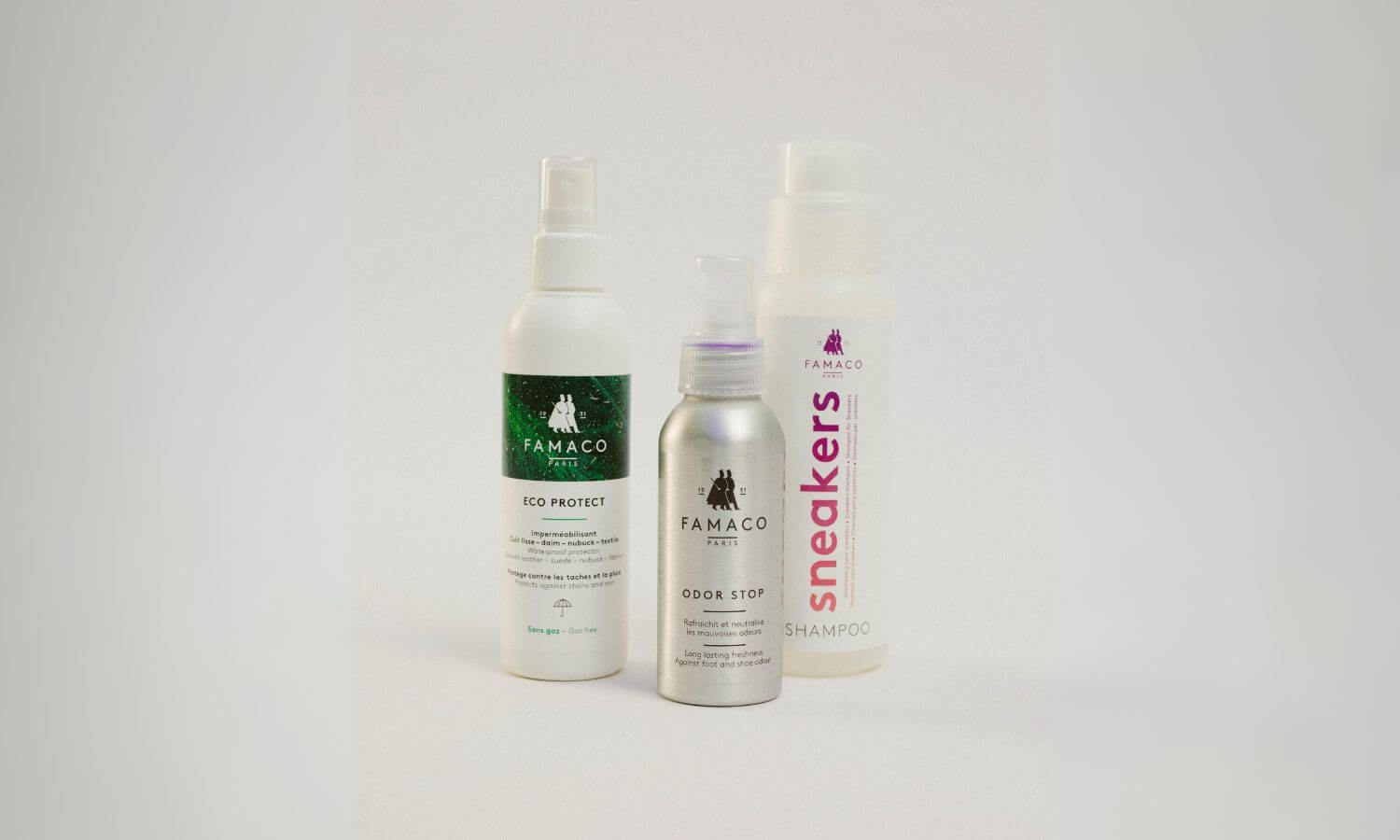
A good suede and nubuck waterproofing spray is one of the best investments you can make. It limits the penetration of water, grease, dirt and dust, and also reduces moisture-related odors.
Waterproofing is recommended:
-
before first use;
-
every two to three weeks depending on wear;
-
after any deep cleaning.
Brands such as Saphir, Omnidaim and Hussard offer sprays specifically formulated for suede. Regular application significantly extends the lifespan of reversed leather and makes future cleaning easier.
Restoring color and appearance: renovators, sprays and tips
After repeated cleaning or exposure to rain, suede may lose intensity or develop lighter areas. Color-restoring sprays help revive the leather, deepen the color and mask minor marks.
These products are available in a wide range of shades—beige, camel, brown, blue, black, burgundy or grey—allowing shoes, bags and garments to be restored while preserving their original look.
Should you use alcohol or vinegar on suede?
Many guides mention alcohol or white vinegar as miracle solutions. In reality, these products must be used with extreme caution. They can cause color bleeding, lightening or make the leather brittle. They should only be applied in very small amounts, on a test area, and never on fragile or untreated suede.
A specialized suede cleaner is always safer than improvised household products.
When should you consult a professional cobbler?
When stains are very old, deep or the item is particularly valuable, a professional cobbler can use advanced techniques such as controlled steam cleaning, professional stain removers, pigment recoloring, suede retexturing or full shoe restoration.
This is often necessary for high-end shoes, luxury bags or delicate leather garments.
Tips and best practices to prevent stains on suede
A few habits can help keep suede looking its best:
-
avoid wearing suede shoes in heavy rain, even when waterproofed;
-
store shoes in a dry place away from humidity;
-
use shoe trees to maintain shape and reduce creasing;
-
brush regularly to prevent dust buildup;
-
clean stains as soon as they appear;
-
apply a high-quality waterproofing spray for long-lasting protection.
With proper care, suede retains its soft, even and elegant appearance for much longer.
Conclusion
Removing stains from suede, nubuck or split leather is entirely possible when using the right products and respecting the specific properties of reversed leather. Sommières clay, suede erasers, crepe brushes, specialized cleaners like Saphir or Hussard, and regular waterproofing are essential tools for successful care.
With this complete guide, you now have all the techniques, solutions and expert advice needed to maintain your suede shoes, clothing and accessories—and preserve their original appearance for as long as possible.


