










Suede, suede leather, and nubuck are reversed leathers appreciated for their velvety texture and elegant appearance. They are commonly found on shoes, sneakers, dress shoes, bags, and garments. Their finesse and unique feel, however, come with a high sensitivity to water, humidity, and stains. This is why waterproofing is the central step in suede care. It helps protect the material, extend its lifespan, and maintain an even appearance over time.
Why does suede need protection?
Suede is leather whose surface has been sanded to achieve a soft, velvety feel. This open structure quickly absorbs water and liquids. A simple raindrop can leave a halo, while a grease stain can penetrate deep between the fibers. Unlike smooth leather, which naturally repels some moisture, suede behaves like exposed skin. When it comes into contact with water, it can deform or slightly change color.
The vulnerability of suede is also due to its grain. When wet, the fibers stick together, altering the appearance of the leather. After drying, the surface may feel stiff or look dull. Waterproofing is specifically designed to prevent this absorption and protect the leather from external aggressions.
The effects of water and humidity on suede leather
Suede shoes and nubuck sneakers are particularly exposed to weather conditions. In rain or humid environments, reversed leather absorbs water almost instantly. Moisture changes fiber density, creates uneven stains, and makes cleaning much more difficult.
Repeated exposure to water can also affect color. Heavily used areas, such as the toe box or the sides of sneakers, may become darker or, conversely, slightly lighter. Without waterproofing, the material becomes more fragile and ages more quickly.
The role of waterproofing: an invisible barrier against stains and rain
A waterproofing spray designed for suede creates a thin protective layer that prevents water and dirt from penetrating the fibers. Unlike a plastic coating, this protection remains breathable. Air can still circulate while moisture and surface stains are repelled. When suede is properly treated, water simply beads on the surface, preventing the formation of halos.
This protection also applies to everyday stains. The spray limits the adhesion of dust, pollution marks, sidewalk dirt, and oily residues. Thanks to its water-repellent effect, the material becomes easier to clean. Even simple maintenance with a crepe brush is enough to restore a clean, velvety look.
Which products should you use to waterproof suede?
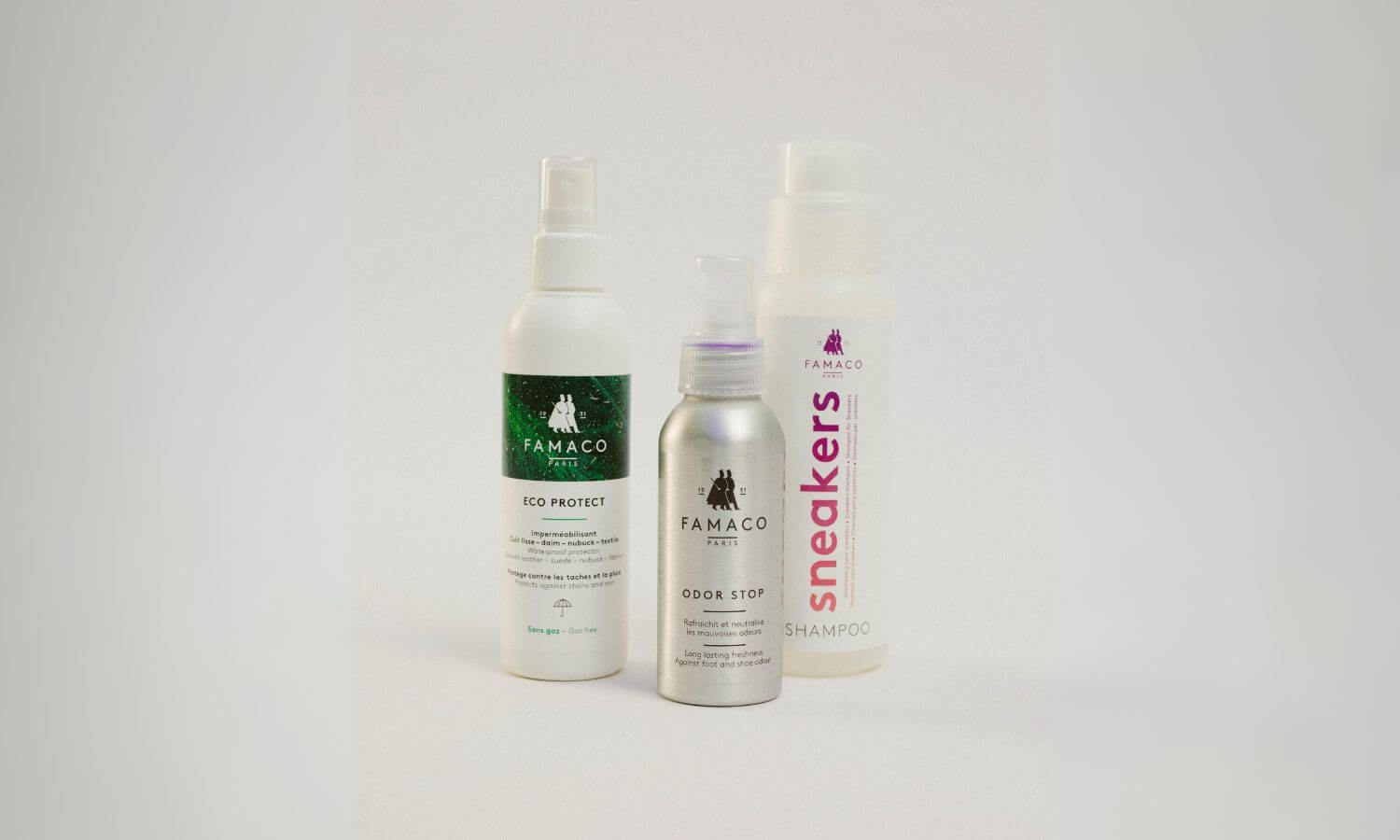
Waterproofing sprays specifically formulated for suede, reversed leather, and nubuck are the most effective, as they do not weigh the material down. Specialized brands such as Saphir offer products that respect both the fiber and the color. These sprays provide long-lasting protection without altering the velvety feel. They are suitable for shoes, jackets, bags, and accessories alike.
A good waterproofing spray should stabilize color, prevent excessive darkening, and maintain the leather’s suppleness. This is why thick liquid waterproofers are avoided for this type of leather. Sprays allow for even distribution without marking the surface.
How to prepare suede before waterproofing?
Before applying a waterproofing product, suede must be clean. Dirt, dust, and residues easily become embedded in the fibers. Gentle brushing with a suitable brush, such as a crepe brush or a special suede brush, helps lift the nap and remove surface particles. This step ensures better spray distribution and optimal adhesion.
Once the leather is clean and dry, spraying can begin. The product should be applied from a consistent distance to cover the suede with a light, even mist. A thin layer is sufficient to create durable protection. Applying too much product can saturate the material and alter its appearance.
Drying: a key step to preserve quality
After application, suede should dry naturally. Artificial heat, such as a hair dryer or radiator, hardens the fibers and damages the velvety finish. Air drying allows the product to work properly. Once dry, light brushing restores the suede’s original nap.
How often should you waterproof suede shoes?
Frequency depends on use and weather conditions. Shoes worn daily in humid environments will need more frequent protection. In general, reapplying every two to three weeks keeps the waterproofing effective. The water-drop test is a good indicator: if the drop spreads instead of beading, it’s time to reapply.
Nubuck or suede sneakers often require more frequent care, as they are more exposed to friction and wear. Regular treatment makes cleaning easier, preserves color, and maintains the quality of the velvety leather.
Waterproofing does not damage suede: a safe and essential step
Contrary to common misconceptions, using a waterproofing spray does not damage suede. Modern products respect the material and do not affect its suppleness or color when applied correctly. Waterproofing extends the leather’s lifespan, prevents irreversible marks, and simplifies daily care. It is one of the most important maintenance steps for preserving the beauty of reversed leathers.
Conclusion: protection and durability
Waterproofing suede leather is far more than a preventive gesture. It is an essential step in protecting a naturally fragile material and maintaining its velvety appearance over time. With regular application of a suitable spray, careful cleaning, and proper maintenance, suede sneakers, shoes, bags, and garments retain their elegance, color, and quality. Protection thus becomes a true investment in durability.


